
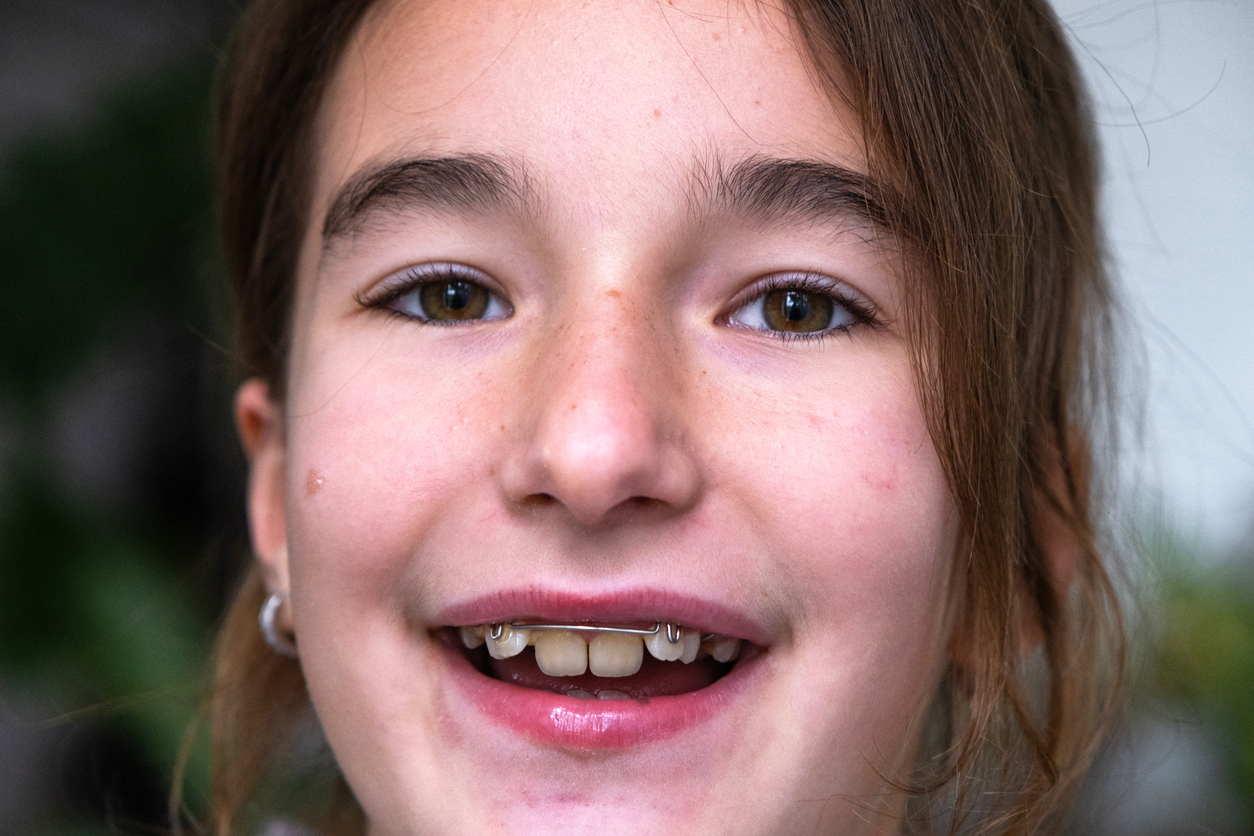
| Quick Answer: A crossbite is a bite problem where some upper teeth sit inside the lower teeth instead of outside them — it can affect the front or back teeth. Causes include genetics, jaw size differences, prolonged thumb or pacifier use, mouth breathing, and delayed tooth loss. Signs include misaligned teeth, a shifting jaw, and uneven wear. Early treatment — often a palatal expander or braces — works best while the jaw is still growing. |
If your child’s top and bottom teeth don’t line up the way you’d expect, it may be a crossbite. At Tiny Teeth in Goodyear and Phoenix, our team evaluates bites early, because catching a crossbite while the jaw is still growing makes treatment simpler. Here’s what to know.
What Is a Crossbite?
Normally, the upper teeth sit slightly outside the lower teeth when the mouth closes. In a crossbite, one or more upper teeth bite inside the lower teeth instead. It can be an anterior crossbite (front teeth) or a posterior crossbite (back teeth), on one or both sides.
What Causes a Crossbite?
- Genetics — inherited jaw and tooth size or shape
- A mismatch between upper and lower jaw width
- Prolonged thumb sucking or pacifier use
- Mouth breathing, which changes how the tongue rests
- Delayed loss of baby teeth or crowding that pushes teeth out of line
Signs to Watch For
- Upper teeth biting inside the lower teeth
- The jaw shifting to one side when closing
- Front teeth that don’t meet properly
- Uneven tooth wear or difficulty chewing
- Facial asymmetry in more pronounced cases
Why Early Treatment Helps
A crossbite usually doesn’t correct itself, and left untreated it can lead to uneven wear, jaw strain, gum problems, and lopsided jaw growth. Because a child’s jaw is still developing, treating a crossbite early — often around age 7, when a first orthodontic check is recommended — is typically simpler and more effective than waiting until the jaw has finished growing.
Treatment Options
- Palatal expander — gently widens a narrow upper jaw to correct a posterior crossbite
- Braces or partial braces — to move specific teeth into the right position
- Removable appliances — in some cases
- Addressing contributing habits, like thumb sucking or mouth breathing
We’ll evaluate your child’s bite and, when treatment is needed, coordinate the right orthodontic approach and timing.
Visit Tiny Teeth in Goodyear & Phoenix
If your child’s bite looks off, our team at our Goodyear and Phoenix offices can evaluate it and recommend whether and when treatment is needed. We care for infants and children and accept AHCCCS and most plans — and a first orthodontic check around age 7 is a great idea. Contact our office to schedule.
Frequently Asked Questions
What is a crossbite in children?
A bite problem where one or more upper teeth sit inside the lower teeth instead of outside them. It can affect the front teeth (anterior) or back teeth (posterior), on one or both sides.
What causes a crossbite?
Genetics, a mismatch in upper and lower jaw width, prolonged thumb or pacifier use, mouth breathing, and delayed baby-tooth loss or crowding.
How do I know if my child has a crossbite?
Look for upper teeth biting inside the lower teeth, a jaw that shifts to one side when closing, front teeth that don’t meet, uneven wear, or trouble chewing. A dentist can confirm it.
Does a crossbite need to be treated?
Usually yes. It rarely corrects itself and can cause uneven wear, jaw strain, gum issues, and lopsided jaw growth. Early treatment while the jaw is growing is simpler and more effective.
How is a crossbite treated in children?
Often with a palatal expander to widen a narrow upper jaw, braces or partial braces to move specific teeth, sometimes removable appliances, plus addressing habits like thumb sucking.
|
Does your child’s bite look off? We truly care about your child’s health and happiness. Reach out to get your child’s appointment scheduled. We can’t wait to see you. Tiny Teeth Kids’ Dentistry & Orthodontics │ Goodyear: 15661 W Roosevelt St, #102, Goodyear, AZ 85338 • Phoenix: 2316 W Bethany Home Rd, #110, Phoenix, AZ 85015 │ (623) 882-1400 (Goodyear) / (602) 776-9700 (Phoenix) │ Contact Us → |