
| Quick Answer: What works: cool (not frozen) teething rings, gentle gum massage, a consistent bedtime routine, and pediatrician-approved pain relief if needed. What to avoid: benzocaine teething gels (Orajel), amber teething necklaces, homeopathic teething tablets, and anything frozen-hard. The FDA has specifically warned against several of these. |
If your baby’s teething has turned bedtime into a nightmare, you’re not alone. At Tiny Teeth Kids’ Dentistry in Phoenix and Goodyear, this is one of the most common questions we get from new parents. The honest answer: there’s no magic bullet, but there are several effective tools, and there are some things you should specifically avoid.
Here are parent-tested tips that work — plus the things you should NOT try, regardless of what the internet tells you.
What Actually Works for Teething Babies at Night
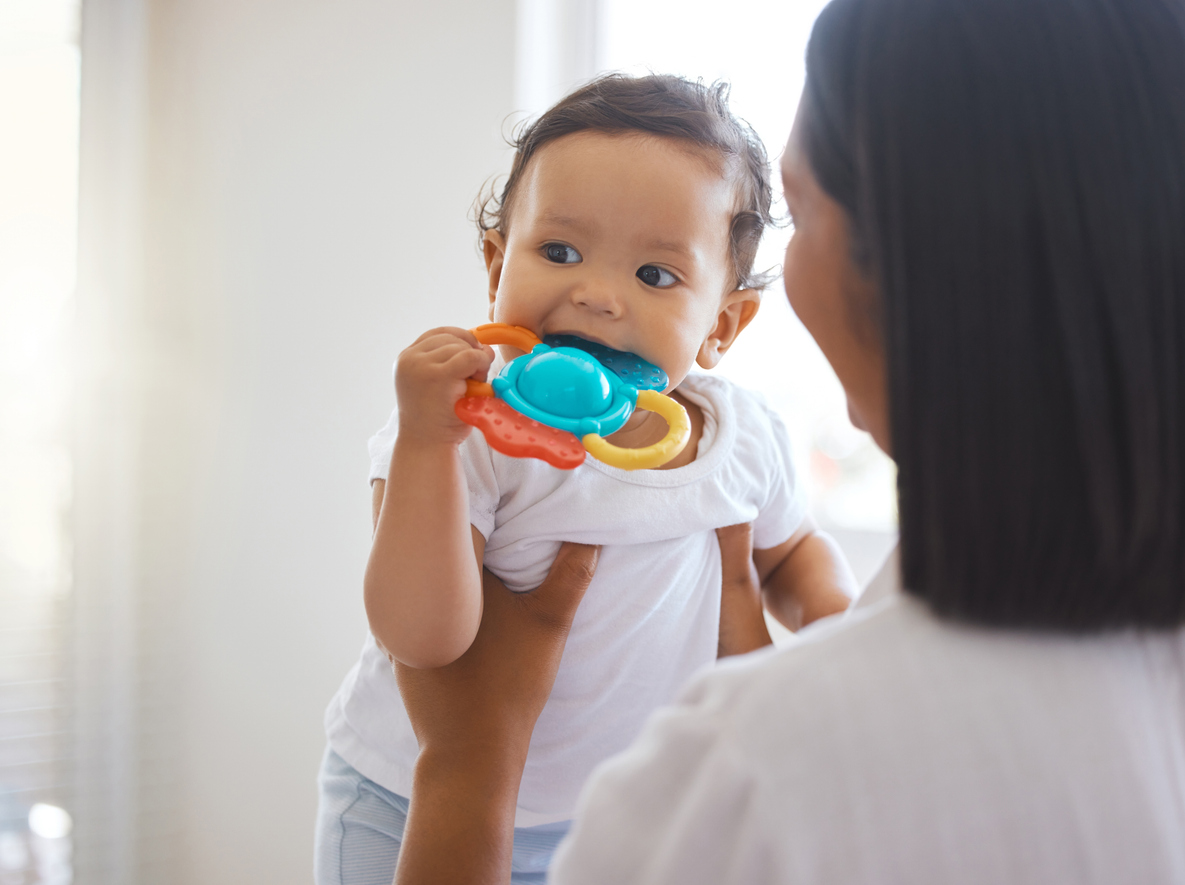
Cool (not frozen) teething rings. The cool temperature numbs the gums slightly. Frozen items can be too hard and damage tender gums. Cool a soft silicone ring in the fridge (not freezer) for 30 minutes before offering.
Gentle gum massage. Wash your hands, then use a clean finger or a damp washcloth to gently rub the gums where the tooth is erupting. The pressure helps relieve discomfort. This works well as part of a bedtime routine.
Consistent bedtime routine. Teething is more tolerable when everything else is predictable. Bath, story, dim lights, calm voices — same time every night. Babies cope better with discomfort when their environment feels secure.
Distraction during the day. The more comfortable a baby is during the day, the better they typically sleep at night. Cold foods (for babies who’ve started solids), chilled fruit in a mesh feeder, or extended outdoor time can all help.
Pediatrician-approved pain relief. For severe teething, infant acetaminophen or ibuprofen (over 6 months) at the appropriate weight-based dose can help with sleep. Always consult your pediatrician before regular use.
What to Avoid
FDA-flagged risks:
- Benzocaine teething gels (Orajel and similar) — risk of methemoglobinemia, a serious blood condition
- Homeopathic teething tablets — FDA has warned about inconsistent ingredient amounts
- Amber teething necklaces — choking and strangulation risk
Other things to skip:
- Frozen washcloths or hard frozen items (gum damage risk)
- Teething biscuits with added sugar (cavity risk for new teeth)
- Putting brandy or alcohol on gums (this is genuinely dangerous and remarkably common advice from older generations)
When to Call the Pediatrician
- High fever (above 101°F) with teething — likely not from teething
- Persistent diarrhea or vomiting
- Severe rash
- Refusal to eat for more than 24 hours
- Significant changes in behavior beyond fussiness
When to See a Pediatric Dentist
First dental visit by your baby’s first birthday is the standard recommendation. Beyond that, if teething seems extreme, asymmetric, or significantly delayed, a pediatric dental evaluation can identify any underlying issues (like impacted teeth or unusual eruption patterns).
Visit Tiny Teeth Kids’ Dentistry
We see infants regularly at our Phoenix and Goodyear offices — both locations have team members trained specifically in infant dental care.
Frequently Asked Questions
What helps a teething baby sleep at night?
A consistent bedtime routine, a cool (not frozen) teething ring during the day, gentle gum massage with a clean finger before bed, and infant-appropriate pain relief if recommended by your pediatrician.
What’s the safest pain relief for teething?
Cold teething rings, gentle gum massage, and (if your pediatrician recommends) infant-appropriate acetaminophen or ibuprofen at the right dose for your baby’s weight. Avoid teething tablets, amber necklaces, and anything with benzocaine.
Should I use teething gels?
The FDA has warned against benzocaine-containing teething gels (like Orajel) for children under 2 due to a rare but serious blood condition. Stick to non-medicated options — cold rings, gum massage, distraction.
When does teething get worse — day or night?
Many parents notice teething seems worse at night. This is partly because there are fewer distractions, partly because babies are tired (lowering their tolerance), and partly because lying flat can increase blood flow to the gums.
How long does teething pain last?
The active eruption (when the tooth is actually breaking through) usually causes a few days of discomfort per tooth. Full teething from first tooth to last lasts roughly 2.5 years, but it’s not constant — most babies have stretches of weeks or months without active teething.
Are teething necklaces safe?
No. Amber teething necklaces have been linked to choking and strangulation deaths and are not recommended by the AAPD or AAP. Don’t use them.
|
Need help with your teething baby? We truly care about your child’s health and happiness. Reach out to get your child’s appointment scheduled. We can’t wait to see you. Tiny Teeth Kids’ Dentistry │ Phoenix (602.776.9700) + Goodyear (623.882.1400) │ Find a Location → |